Peters Township 724-942-4229

Can Invisalign Fix an Overbite? What Pittsburgh Patients Should Know
An overbite is one of the most common bite concerns people notice when they look at their smile. For some patients, the upper front teeth extend slightly over the lower teeth. For others, the overlap may be more noticeable and can affect the way the teeth come together. If you have been told that you have an overbite, you may wonder whether you need traditional braces or whether clear aligners can correct the problem.
The good news is that modern orthodontic treatment offers several options for improving both tooth alignment and bite relationships. Invisalign in Pittsburgh may be an option for certain patients with overbites, depending on the severity of the condition, tooth position, jaw development, and overall treatment goals.
At Sepic & Madison Orthodontics, we provide customized orthodontic care designed around each patient’s individual needs. Rather than assuming that one treatment works for every smile, our team evaluates your teeth and bite before recommending the most appropriate approach.
What Is an Overbite?
An overbite occurs when the upper front teeth overlap the lower front teeth vertically when the mouth is closed. A small amount of overlap can be normal, but a deeper or more pronounced overbite may require orthodontic evaluation.
An overbite can develop for different reasons. Tooth positioning, jaw development, genetics, and certain childhood habits can all contribute to how the upper and lower teeth meet.
Some people notice an overbite because of the appearance of their smile, while others may experience functional concerns.
Possible signs of a more pronounced overbite include:
- Upper front teeth covering much of the lower front teeth
- Lower teeth biting into the roof of the mouth
- Difficulty biting or chewing comfortably
- Excessive wear on certain teeth
- Changes in the way the upper and lower teeth meet
- A smile that appears increasingly uneven or crowded
Not every overbite requires orthodontic treatment. However, if you are concerned about the appearance or function of your bite, an orthodontic evaluation can help determine whether treatment would be beneficial.
Can Invisalign Correct an Overbite?
In many cases, Invisalign can be used to improve an overbite. Clear aligners work by applying controlled pressure to gradually move teeth according to a customized treatment plan.
However, the important question is not simply whether Invisalign can treat an overbite. The more important question is whether Invisalign is appropriate for your particular type and severity of overbite.
Some overbites may respond well to clear aligner treatment, while more complex bite problems may require additional orthodontic appliances or traditional braces. The extent of tooth movement required, the relationship between the upper and lower jaws, and the patient’s stage of growth can all influence treatment planning.
That is why an evaluation with an orthodontist is an important first step.
At Sepic & Madison Orthodontics, our Invisalign treatment begins with an assessment of your orthodontic needs. We use digital technology, including iTero scanning, to create detailed 3D images that help us plan tooth movement and determine whether Invisalign is a suitable option for your smile.
How Does Invisalign Help Improve an Overbite?
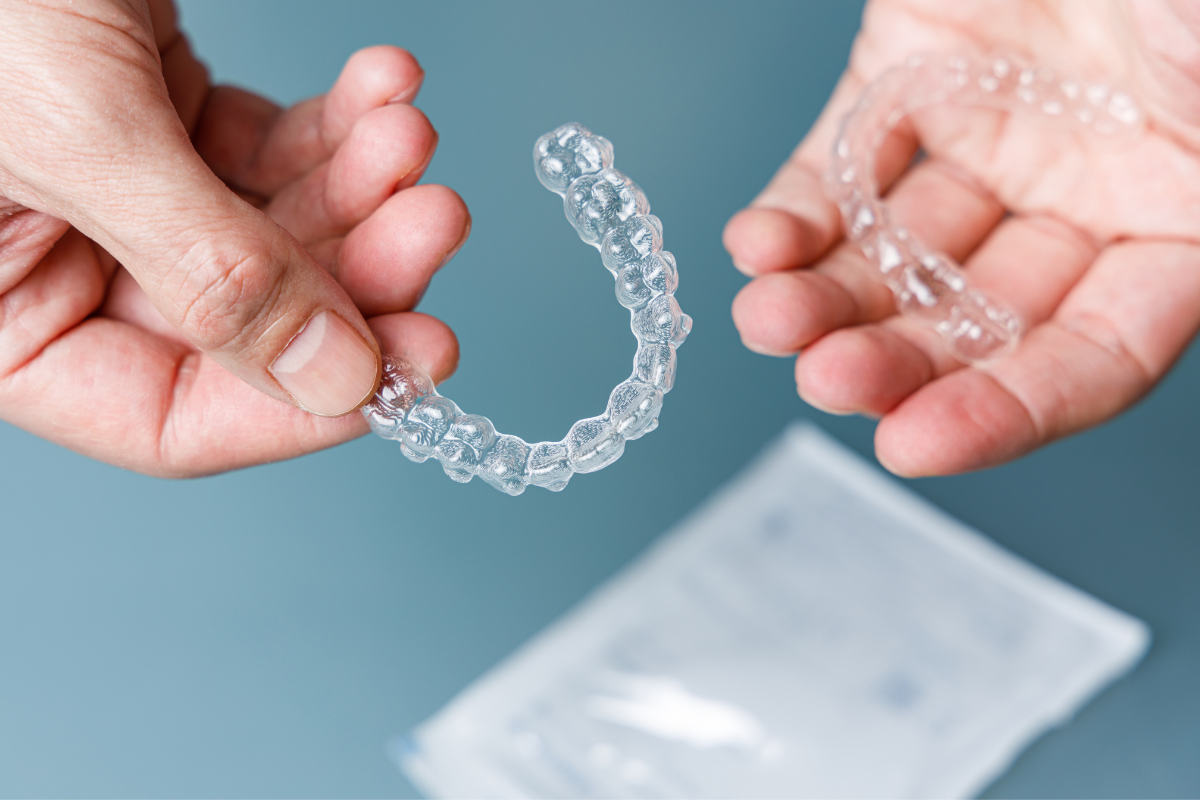
Invisalign treatment uses a series of custom-made clear aligners. Each aligner is designed to make specific adjustments to the position of your teeth.
Rather than moving the teeth randomly, your orthodontist develops a treatment plan that maps out the intended movements throughout the treatment process.
Depending on your individual situation, treatment may involve:
1. Evaluating the Bite
Your orthodontist examines how your upper and lower teeth come together. The evaluation may also include photographs, digital scans, X-rays, or other diagnostic information when appropriate.
This helps determine whether the overbite is primarily related to tooth positioning or whether other factors need to be considered.
2. Creating a Customized Treatment Plan
If Invisalign is appropriate, your digital records can be used to plan how your teeth should move.
The treatment plan is personalized rather than based on a standard sequence. Your orthodontist considers the current position of your teeth, the desired outcome, and the movements necessary to improve alignment and bite.
3. Wearing Your Aligners as Directed
Your Invisalign aligners need to be worn consistently for treatment to progress as planned. Sepic & Madison Orthodontics recommends wearing Invisalign aligners approximately 20 to 22 hours per day, removing them for eating, brushing, and flossing.
Consistency matters because clear aligners are removable. If you frequently leave them out for extended periods, your teeth may not move according to the intended schedule.
4. Monitoring Your Progress
Orthodontic appointments allow your provider to monitor how your teeth and bite are responding to treatment.
As treatment progresses, you move through different sets of aligners. Each new aligner is designed to continue the planned tooth movements.
If your teeth are not responding as expected, your orthodontist can determine whether adjustments or additional treatment steps are needed.
Is Invisalign Suitable for Every Overbite?
No. Invisalign is an effective orthodontic option, but it is not automatically the right treatment for every patient with an overbite.
The severity and underlying cause of the overbite are important. An overbite caused primarily by tooth positioning may be approached differently from a complex skeletal bite relationship.
Age and growth can also influence treatment planning. Children and teens who are still growing may have different orthodontic needs from adults.
For some patients, Invisalign may be recommended on its own. Others may benefit from additional orthodontic appliances or traditional braces to achieve the necessary tooth and bite movements.
The goal should not be to choose Invisalign simply because it is clear. The goal is to select a treatment that can safely and predictably address the patient’s orthodontic needs.
Invisalign vs. Braces for an Overbite
If you are considering treatment, you may wonder whether clear aligners or braces are better for correcting an overbite.
Both can be effective orthodontic treatments, but they work differently and may be appropriate for different situations.
Invisalign offers several advantages for patients who qualify:
- Clear aligners are much less noticeable than traditional metal braces.
- Aligners can be removed for meals and daily oral hygiene.
- There are no traditional brackets and wires.
- Digital treatment planning can help map planned tooth movements.
- Patients can continue brushing and flossing without working around fixed brackets.
Traditional braces, on the other hand, remain attached to the teeth throughout treatment. This can provide orthodontists with greater control for certain complex tooth movements.
There is no universal answer as to which option is better. Your orthodontist needs to evaluate the specific characteristics of your bite before making a recommendation.
What Should Pittsburgh Patients Expect During an Invisalign Consultation?
If you are considering Invisalign for an overbite, your consultation is an opportunity to understand your treatment options before making a decision.
At Sepic & Madison Orthodontics, we start by learning about your concerns and orthodontic goals. Our team then evaluates your teeth and bite to determine what type of treatment may be appropriate.
Your consultation may address questions such as:
- How significant is my overbite?
- Is the problem related mainly to tooth position or other factors?
- Can clear aligners address my specific bite?
- Would braces provide a better treatment approach?
- How much tooth movement is necessary?
- What will my treatment plan involve?
- What should I expect during treatment and after treatment?
Having these questions answered can make it easier to understand your options and choose treatment with realistic expectations.
Can Invisalign Improve More Than an Overbite?
One benefit of an orthodontic evaluation is that your provider can look at your entire bite rather than focusing on one visible concern.
Patients with an overbite may also have crowding, gaps, rotated teeth, or other alignment concerns. In some cases, a comprehensive Invisalign treatment plan can address multiple orthodontic issues at the same time.
Sepic & Madison Orthodontics provides Invisalign treatment for a range of orthodontic concerns, including overbites, underbites, crossbites, crowding, open bites, and spacing issues.
The specific combination of problems matters, however. A treatment plan should be designed around your complete orthodontic needs rather than a single symptom.
Why Professional Invisalign Treatment Matters
Clear aligners may look simple, but orthodontic treatment involves more than wearing a series of plastic trays.
The success of treatment depends on accurate diagnosis, appropriate treatment planning, controlled tooth movement, patient compliance, and professional monitoring.
Choosing an experienced orthodontic practice allows your treatment to be evaluated throughout the process.
At Sepic & Madison Orthodontics, we provide personalized Invisalign treatment supported by digital technology and orthodontic expertise. Our practice is a certified Diamond Invisalign and Invisalign Teen provider, and we offer both Invisalign and traditional braces so patients can be evaluated for the treatment option that best fits their needs.
What Happens After Invisalign Treatment?
Correcting an overbite is only part of the orthodontic journey. Once your active treatment is complete, your teeth need to be maintained in their new positions.
Without proper retention, teeth can gradually shift over time. Your orthodontist may recommend custom retainers to help preserve your results.
Retention is an important part of protecting the work completed during Invisalign treatment. Following your orthodontist’s instructions can help you maintain your new alignment for the long term.
Frequently Asked Questions
Can Invisalign fix a mild overbite?
Invisalign may be able to correct certain mild overbites, particularly when the issue is related to tooth positioning. However, candidacy depends on the individual bite and the movements required. An orthodontic evaluation is the best way to determine whether clear aligners are appropriate.
Can Invisalign fix a severe overbite?
Some more significant overbites may require treatment beyond Invisalign alone. The answer depends on the severity, cause, jaw relationship, and amount of movement needed. Your orthodontist can determine whether Invisalign, braces, or additional appliances would provide the most appropriate approach.
How long does Invisalign take to correct an overbite?
Treatment time varies from patient to patient. The number of aligners, complexity of the bite, required tooth movements, and how consistently the aligners are worn can all affect treatment time. Your orthodontist can provide a more personalized estimate after evaluating your smile.
Do I have to wear Invisalign all day?
For treatment to progress as planned, Invisalign aligners generally need to be worn for about 20 to 22 hours each day. They are normally removed for eating, brushing, and flossing. Following your orthodontist’s instructions is important for maintaining treatment progress.
Is Invisalign better than braces for an overbite?
Neither treatment is universally better. Invisalign may be an excellent option for patients who qualify, while traditional braces may be preferable for certain complex orthodontic movements. Our team can evaluate your bite and explain which treatment options are appropriate for your specific needs.
Take the Next Step Toward a Better-Aligned Bite
An overbite does not necessarily mean that you need traditional braces. For the right patient, Invisalign can provide a discreet and convenient way to improve tooth alignment and address certain bite concerns.
The best place to start is with a professional orthodontic evaluation. At Sepic & Madison Orthodontics, we provide customized invisalign in pittsburgh and orthodontic treatment for patients in Pittsburgh and surrounding communities. Our team uses detailed digital treatment planning to evaluate your smile, explain your options, and create a treatment approach based on your individual needs.
If you are wondering whether Invisalign could improve your overbite, Book Now to schedule a consultation with Sepic & Madison Orthodontics and take the next step toward a healthier, more confident smile.